It was my first mountain bike organized event.
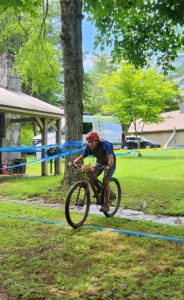 I had prepared well for the Hammer Drop 18-mile race at Henry Horton State Park. This was the trail where I had learned to mountain bike, a fun, flowing course with just enough technical sections to teach me a few painful lessons. Early on, those lessons came in the form of bumps and bruises as I discovered that a little speed is often your friend and that SPD pedals probably aren’t for beginners.
Wait, you might ask, aren’t you an old guy? Why take up mountain biking at this stage of life? I’m 59; I should be focused on something less risky, like checkers, right?
A couple of reasons. I enjoy being in the woods, and I like having different ways to stay active. To be clear, I’m a “two tires on the ground at all times” rider. No jumps. No screaming descents. I still wear plenty of protective gear, though. A bruised rib from a series of falls last December is still fresh enough in my memory to keep me humble.
Race day began with perfect weather, until it didn’t.
About forty-five minutes before the start, summer showers rolled in. Just as it looked like they were ending, another round arrived, then another. By race time, the course was muddy enough that the organizers shortened the event from three six-mile laps to two. The combination of slick trails and wet rocks would likely slow everyone considerably.
I’d only ridden in heavy rain once before, ironically less than a week earlier while on a business trip in Kentucky. I was caught in a downpour during the final two miles of that ride. It wasn’t ideal, but it gave me a little confidence that I could handle whatever the trail offered that day.
I wasn’t about to quit before the race even began simply because conditions weren’t perfect.
Sometime later, while looking at the photo of me crossing the finish line, a friend commented that I looked determined all the way to the end.
He was right.
I had decided before the race started that I was going to finish, regardless of the mud.
That reminded me of two simple truths I needed to hear again: don’t give up because things don’t go your way, and keep moving forward when you don’t feel like it.
I’ve been blessed with a long and steady career. I’ve never been fired, never been laid off, and I’ve never left a position without another one waiting. That doesn’t mean the journey has been easy. There were plenty of seasons when things seemed to be going exactly the wrong way.
In fact, I was talking with a friend over breakfast this morning about one particularly difficult job. I admitted that I had wanted to quit.
He responded with something to the effect of, “If you had quit then, you wouldn’t be where you are today.”
He was right.
Sometimes life isn’t as clean as we’d like.
Sometimes we have to get a little dirty.
Sometimes we end up completely covered in mud.
We don’t control the weather. We don’t control the trail. We don’t control many of the circumstances life puts in front of us.
But we do control whether we stop pedaling.
The trail eventually dries. The mud washes off. The finish line is still there for those who keep moving.
Photo by David Cloud

 Point of view, or POV, in a manuscript describes from what character the scene is experienced. The reader is “in the head” of the POV character – what the character sees, the reader sees. Changing POV within a scene, or even a chapter, can confuse the reader by removing the perspective anchor. Referred to as “head-hopping,” maintaining what I refer to as “POV discipline” is a basic skill novelists need to master.
 A novelette is shorter than a novella, which is shorter than a novel – averages of around 10,000 words, 35,000 words, and 80,000 words, respectively. Don’t let its diminutive stature fool you, though. A novelette requires the same attention to plot development and detail as a novel.
 I called my colleague and he assured me he thought it would be fine to set up so long as it was before lunch. The conference center hosting the event was about a 40-minute drive – add in driving home from the office to change, I made it onsite in just over an hour and set up in a few minutes. As it turned out, the planned morning break for attendees to visit the vendor area never really materialized. In the end, I missed very little.
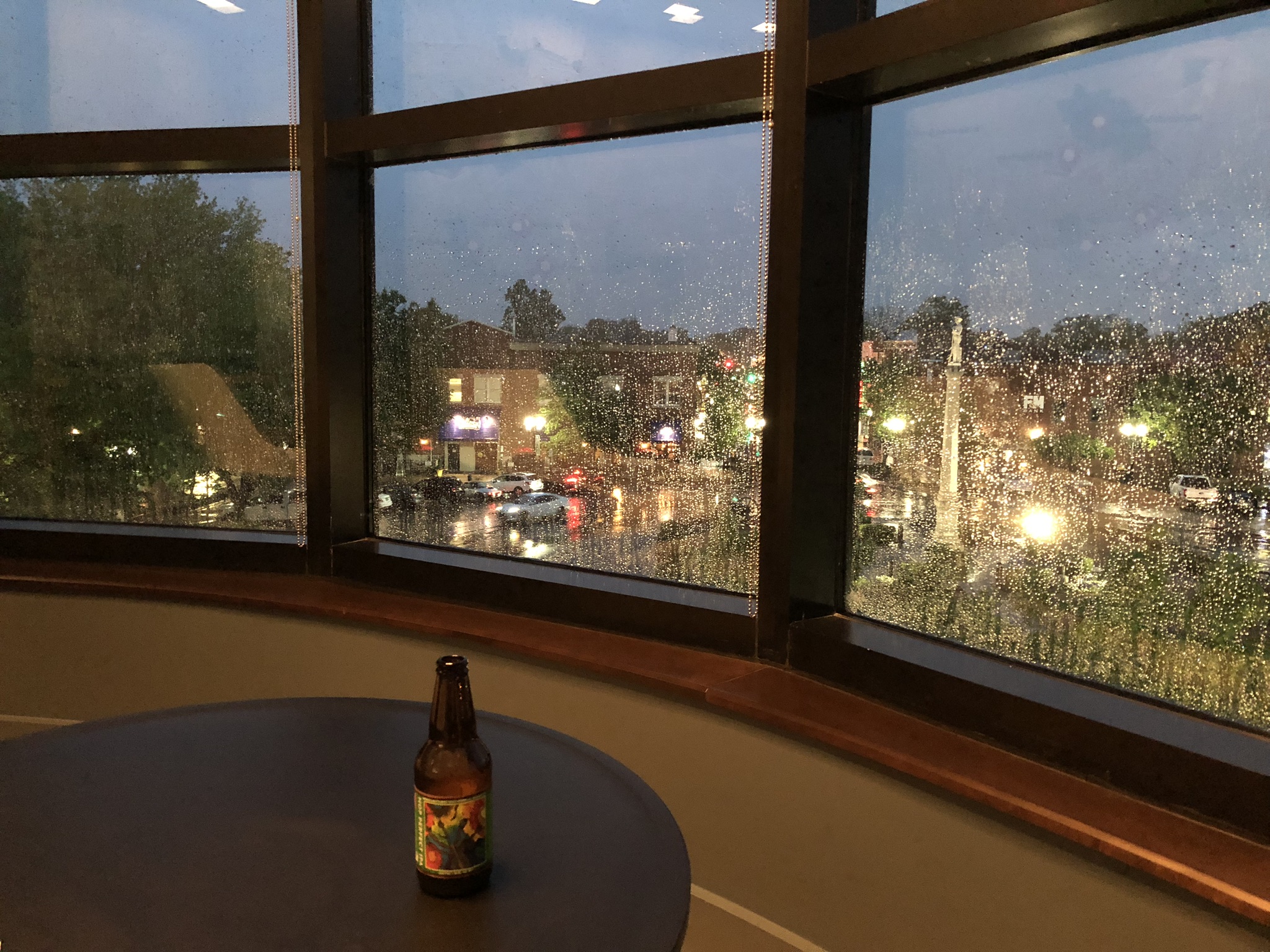 After the conference day ended I returned to my office, dimmed the lights in the common area, grabbed a beer left over from the afternoon networking event, and enjoyed the view of the old town square – all while realizing just how blessed I was to be an active participant in community.