 Earlier this week I sent the completed manuscript for Leaving Darkness to the publisher. As the formatting, cover design, and other work commence, I plan to set aside some time to write about lessons learned. As indie authors, we should look at every opportunity to learn as we progress and hone our craft.
I decided to engage a development editor – that in itself was a smart move and a positive lesson in itself. The lessons in writing alone brought value – it was akin to taking an advanced college course in fiction writing. It helped that the editor I engaged was a college-level instructor as well.
An early and perhaps the most significant lesson from this graduate-level experience is learning what I dub POV Discipline. Of course, the point of view is how the story is told, and there are many examples. I wrote Leaving Darkness in limited third person, following the arcs of two characters, the protagonist and the antagonist. As you can imagine, this created the danger of mixing point of views.
I could have switched and restructured the antagonist’s portions to be seen from the protagonist, but doing so made no sense in the story I was trying to tell. I wanted to show the rise of one, the fall of another. My solution, as suggested by my editor, was to structure each chapter from one of the character’s point of view. Doing so was not easy, but it worked.
Still, there remained some elements of POV crossover. When POV discipline is not maintained from the start, it becomes very difficult to correct as the project matures. We gloss over POV step outs because the story is so familiar to us, yet when pointed out the error becomes so obvious.
Some are easy to cure – instead of, “He worried about what Bill was saying,” we can write, “Bill saw the worried look on Joe’s face after relating the bad news.” We still don’t know for sure that Joe is worried, but the message comes across that likely he is.
I never paid much attention to POV discipline in the past, but going forward it will be forefront in any future fiction project. I suspect some may be thinking, “Well, yeah, that’s obvious, Greg!” but for those of us without a formal fiction writing education, it can be a challenge. It would seem to maintain a consistent POV does not come naturally, rather it is a learned practice.
 is in the copy edit phase. That means that I am paying to fix errors caused by all of the times my attention wandered in seventh grade English. I’m fine with that because working with a competent editor helps to sharpen the writing skills I have and introduce others I missed along the line.
 Today I completed the revisions to my third novel, Leaving Darkness. The next step is copy editing (hiring someone for that), then on to the publisher. It will be available from Westbow sometime…
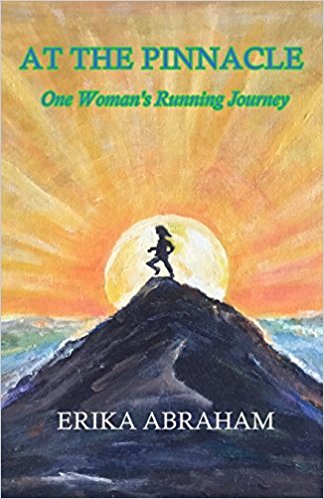 me with a folder full of papers with articles taped to them, each sheet a component of chapters. What she had done was take running articles she had written over the years, mainly for her local running clubs, and stitched them together in a unique way to tell her story. She began running on a dare in her late 40s and still runs regularly today as she approaches her 80th birthday. Yes, I wrote 80 – what an inspiration!
 try at something and fail than not have tried at all for the fear of failure. Believe me, I get that fear. I have been ensnared by that fear. It is paralyzing and debilitating, sapping the strength of the desire to try something new, fearful that others may reject the effort.
 My two ongoing writing projects are vastly different. One is my third novel, first draft about 90% completed but stalled because of competing priorities. The other is not my work. I am performing the duties of editing, formatting, and publishing. Both will likely be out sometime in 2018.
 I haven’t blogged for a while. Truth is, I’ve been quite busy with completing my third novel, editing another book whose author is very special to me, and standing up my consulting business (security, not writing). All this points to life moving on, which it does, all around us. Sometimes that movement is not as pleasant as we’d like.
 likened those internal discussions to similar musings after nearly ten years of flying my own small, old airplane. Visions of frequent family visits, vacations to exotic locations, and Angel Flight volunteerism had given way to dull weekly hour-long local flights to keep my piloting skills current and the plane in operating condition. I was not particularly enjoying the experience anymore.