Looking for Followers in All the Wrong Places

Book marketing is challenging. In order to get our words read by others, we have to not only make them aware of our works but convince them to read it. That is necessary from a sales perspective. Christian fiction authors also bear the responsibility of getting their words read as we write to promote God’s kingdom. Yet often authors shun marketing.sara-kurfess-1416213-unsplash

I get it. Marketing is hard and not exciting and just not fun, but we have to put at least as much effort into marketing our books as creating them. I know that from firsthand experience. I did zero promotion for my first two novels (beyond a few lame tweets and mention on a dusty website). And I was surprised and saddened at my anemic sales! So much I had to learn (and still have to learn).

An author’s platform is, in my view, their online presence and following. Twitter, Instagram, Facebook, blog, website, and so on make up the online presence. Constant activity in all channels is necessary, though it’s not necessary to choose all channels. Followers are also necessary, because who will care about or even read tweets to a dozen followers? Sure, hashtags ensure more visibility, but it’s a very large Twitter universe out there.

Currently in the #WritingCommunity there are numerous activities to promote increasing Twitter followers. I admit that I began to participate in these follies, essentially variations of the “I’ll follow you if you follow me.” Why am I negative about them? Because these do not result in quality followers. I could build up 14,000 followers easily but if they are all mainly authors struggling for recognition like myself, what good is that. No, we need to focus on quality not quantity with our social media engagements, else isn’t it a waste of time?

I’ve adopted a better strategy. Write well. Interact with communities I want to reach as an author, not echo chambers. I’d rather have 100 followers passionate about my works than 20,000 who don’t care about my content, just my follow back. Focusing on a quality platform is the only way I can fulfill God’s call for me as a Christian writer.

Photo by Sara Kurfeß on Unsplash

Ethics in Leadership

No, this is not the title of my next novel (though I kind of like it). Today I’m scheduled to speak to students at Middle Tennessee State University on ethics in leadership. I’ve been thinking about what to say – often when I give these types of talks, I don’t prepare a “script” but rather go with what is on my mind. It may sound like the wrong method, but in an intimate classroom setting I prefer the discussion approach rather than following a stiff presentation march (with potential Death by PowerPoint).ian-schneider-66374-unsplash

Still, thinking about ethics in leadership has led me to certain points in my life when, in hindsight (and often at the time), I chose the ethical leadership decision. I’ve come to realize the reason for that. In reality, thee is no such thing as unethical leadership.

A leader is not someone who oversees people, a department, a squadron, and so on. Those who approach successful completion of a mission by relying solely on chain of command are not leaders, they are managers. Leaders may or may not be someone’s superior in an organizational chart. In fact, most likely not.

Leadership is about service. Conversely, true service is leadership. Ethical leadership involves using our positions of influence to achieve positive results for others. If one’s motives inherently are self-serving, how can that be leadership? One may argue that both can exist – a person may lead out of service but also desire to reap the benefits – and I would agree. But if the primary motivator is self and not others, that is not ethical leadership (and there is no such thing as unethical leadership, in my opinion).

Christian writers, fiction and non-fiction, take on a tremendous responsibility that I am not sure is often realized. As a Christian, I have the responsibility to advance His kingdom through my words (written and spoken). Yes, book sales and reputation and name recognition are important because we want encouragement that we are making a difference. But they cannot be prime motivators for creating works – He must always be first.

Photo by Ian Schneider on Unsplash

My Freelance Writing Roots

Yesterday I was working on an ongoing and seemingly endless project: cleaning out my basement. I’m on a mission to simplify my life, and that means releasing items that no longer bring me joy (I haven’t read Marie Kondo’s book on decluttering, but I get the core concept).Computerworld

I have an office in the basement that I don’t use much anymore since moving to a rented office (I tend to be more productive outside of the house, so it’s worth the cost). The basement space consists of a desk and table. Computers, monitors, and a small filing cabinet are gone, either repurposed or disposed of. The filing cabinet landed in my rented office, but I didn’t take all of the files with me. Those folders have sat on the basement desk for several months awaiting review.

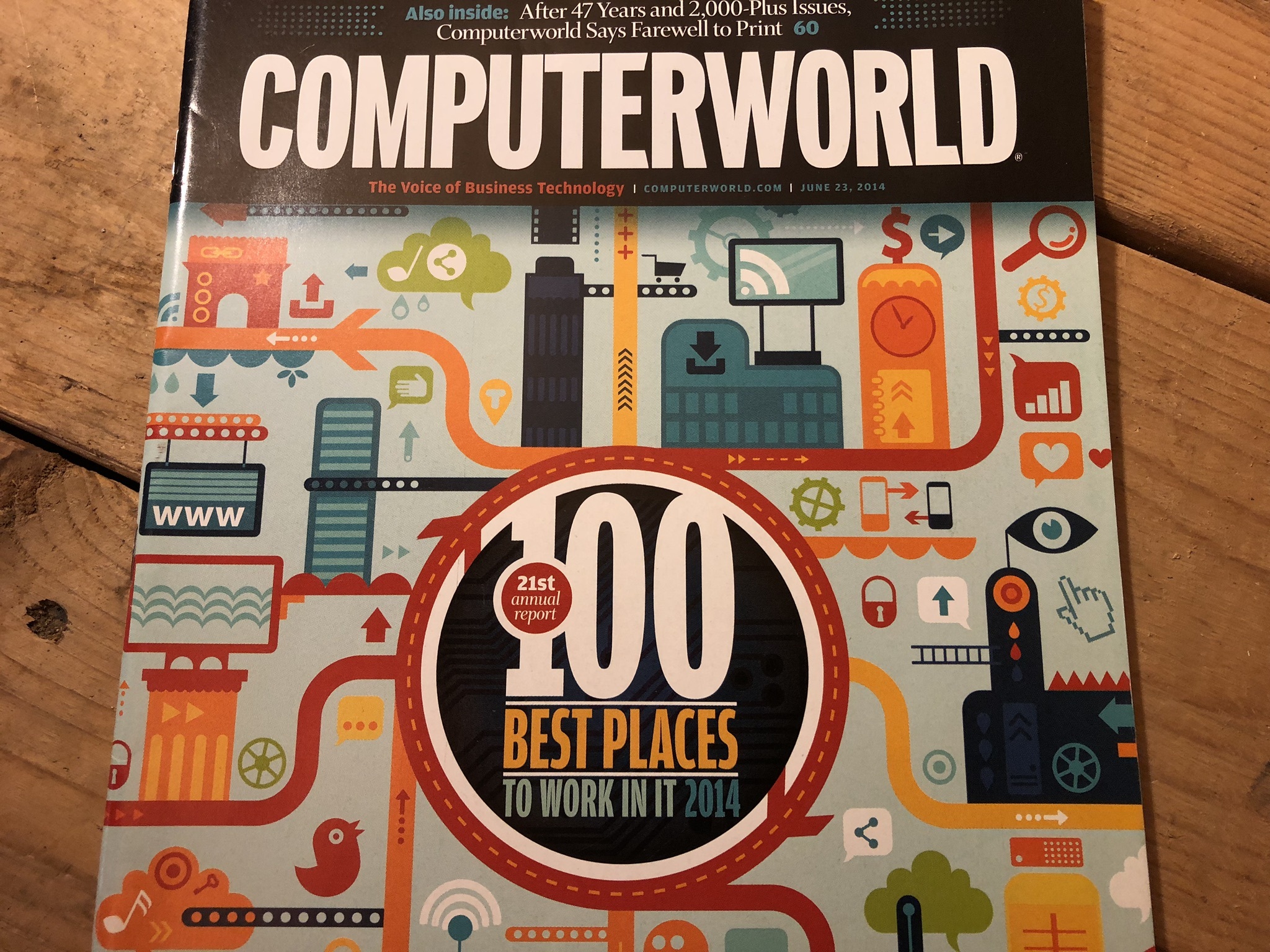
While examining the contents of one of the folders, I found the last print copy of Computerworld, an Information Technology magazine that used to be a fixture on computer and network pros desks. The magazine launched an online presence many years ago, and eventually that resulted in the downsizing and elimination of the print copy.

I recall reading a message, whether in the print copy, online, or in email, that Computerworld was interested in freelance writers. With no such experience, I inquired and landed my first freelance writing gig. My goal was exposure and to give back, while earning a few dollars. I remember being pleasantly surprised that the job paid more than I originally believed. Earning money while writing – what a concept!

My first article, published almost exactly 13 years ago to the day, began a three-year relationship with Computerworld, where I provided content on computer networking and information security on a not-quite-monthly basis. Originally I had expected the three-part series I pitched to be the extent of the job, but I suppose that my contributions were well-received as the editorial department eventually requested more.

It was a fun experience until I received my first negative feedback. I don’t recall the details, only asking the editor how or if I should respond. Essentially I crafted a very professional reply and learned that not everyone will agree with what I write. A solid lesson that I have built on over the years.

I haven’t written as a freelancer for about a decade now, but I’m suddenly intrigued about the possibility of returning to the field. We will see.

I kept the magazine, by the way. It still brings me joy.


Scrivener, A Writing Tool

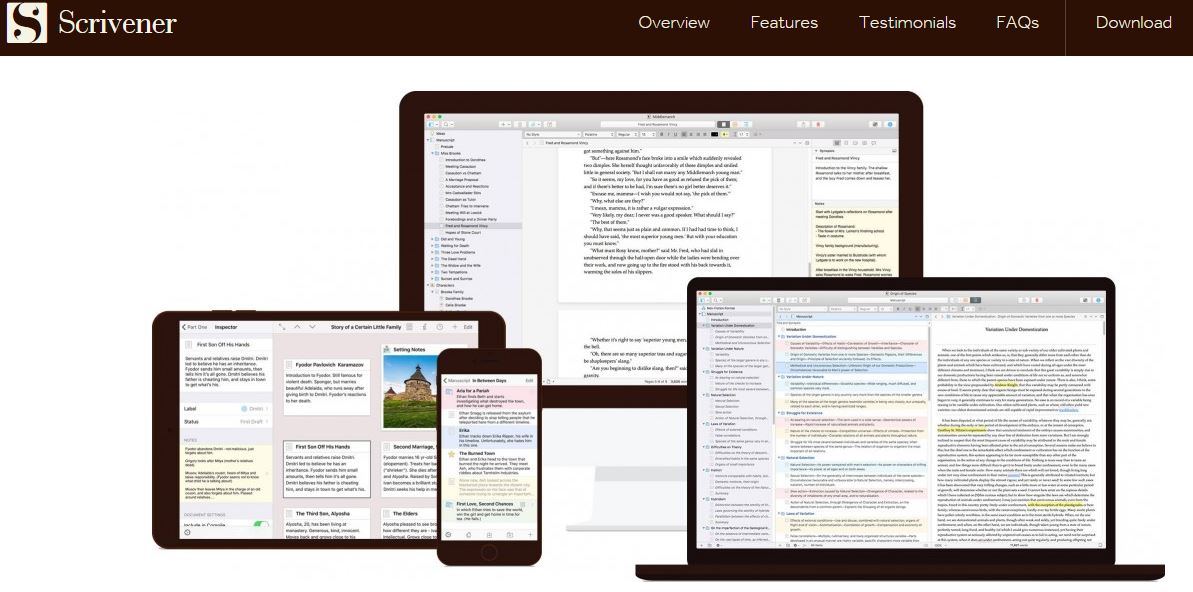
Often I listen to podcasts when I work out. It’s a great use of time, be it while out on the trails jogging or in the gym lifting. Recently I listened to an episode of Dave Chesson’s Book Marketing Show podcast about writing tools. He mentioned the writing tool Scrivener. I had never heard of this software, but then again, I had not performed much research on writing tools.scriviner screenshot

His description of the software intrigued me as I rested between sets on the chest fly machine. I have always used Word for writing, and it has served me well, but it is not designed to create lengthy manuscripts. For example, scene reordering or moving to another chapter is common. There is no easy method beyond cut and paste to do that in Word.

Based on the podcast, I downloaded a trial version of Scrivener after I returned home. They offer a true thirty day test period – use it two days a week and it will last 15 weeks, as stated on their website. That in itself is encouraging, as I have often downloaded test software with good intentions, then life happens, and upon return to test the period is over. No such risk here.

I installed Scrivener and imported my two WIPs into the same project since the first is a short prologue for the novel. I’ll eventually want to separate when it comes time to export (that combines all separate parts, chapters, and scenes into one document) but for character development and tracking, having all together for development makes sense.

I won’t go over some of the features of Scrivener that writers of longer works find useful, as I encourage you to listen to the podcast mentioned above for that information. However, I will plan to periodically provide updates here my impressions and experiences with the software. From my early experience (about an hour), I am convinced that there is value to go further with the trial.

One last point, it’s not expensive. I believe the cost is $45, but the podcast episode page has a code for 20% off.

When Not Writing is Writing

I have not put any effort into my WIP today, nor do I plan to. But that’s not to say that I haven’t been writing. No, by my estimation, I have laid down about 2500 words today. In fact, I’ve spent the better part of the day writing and editing and formatting, just not Christian fiction.

A backstory is in order (yes, I know, never in chapter one, or in the blog case, paragraph one I suppose – this is paragraph two, so I’m good). A little less than two years ago, I left the corporate word to start my own information security executive consulting company, vCISO Services, LLC. We provide executive information security consulting – part-time Chief Information Security Officer services.

I love what I do, which is servingCover2 small and midsized businesses with access to quality, experienced CISO talent. Business has been solid, and we have clients nationwide. I enjoy helping businesses, plus it is a calling – check this video for my short testimony from 2017 explaining that.

However, running a business is more than working for clients. Another aspect is working to find clients to work for. Yes, that dreaded marketing aspect that is a difficult part of being an indie writer exists in all businesses. Thus, at times I have to turn off the client side and focus on marketing. Today was that type of day.

I finished the first edition of a small guide to information security for small and midsized businesses, drawing on my two years as a consultant. What I tried to do was explain the issues that most books or websites don’t address – pragmatic advice for those who need it. At about 6500 words, it’s not a long read, but it’s enough for a giveaway in return for a newsletter list sign up.

This is where my fiction writing experience helps. I’m currently running a BookFunnel promo for my first novel to build my writing email list. This will serve the same purpose for my company list (substantially larger than my author list at the moment but growth is always good). I would not have opened a BookFunnel account if it weren’t for my fiction marketing needs. Nor would I have known about Calibre if I didn’t have a need to convert my first novel to ebook.

So – no WIP writing but much writing activity. Still sounds like a productive day.


Writer’s Block

Writer’s block – does such exist? I can say for sure that when I finally found a moment this morning to sit down and create today’s blog post I stared at the blank wall behind my computer, then the concrete support pillar next to my office desk, then at the desk itself, then I checked email, Twitter, the weather…road-closed-sign-2079685_1920

Nothing.

Then the revelation – I’ll discuss this block thing. It’s not a topic I like to address, because you can really only do so once. Kind of like using the Go to Go card in Monopoly. You won’t have it available the next time you need to bypass your adversary’s hotel-laden Boardwalk and Park Place.

I had several topics in mind last night, a few of which I remember:

  • Information security and writing – we need to keep our IP (Intellectual Property) secure. We also need to keep our email lists secure (particularly if they contain any European Union personal data – see the GDPR). But I work in information security all day. I love what I do, but writing is supposed to be a break from infosec. Perhaps another day.
  • Bike riding – I’ve begun to ride my bike to work each day, about 5 miles each way. The threat of rain this afternoon nixed that idea. No one wants to be on a road bike on he road when it’s pouring.
  • Word count fixation – It just hit me as I began the third bullet, at 227 then and I aim for 300-500. I strive for 1000 per day for my WIP but that’s not practical some days (remember, I have a full-time job). I didn’t hit that goal yesterday, we will see what today brings.
  • Morning prayer – I’m trying to intentionally invite God into my work life by Tweeting a prayer every morning at (or around) 8AM. It helps me, and maybe it may help others. Whether it’s an ask or a praise, it is important to keep God central in my life. I use the hashtag #8AMPrayer. Actually, that is a nice topic, but maybe for tomorrow since my word count fixation just informed me I’m well past the self-imposed 300 minimum.

Pounding out this blog has presented two revelations. First, when at the writer’s block wall, just write. Babble on the keyboard on an endless stream of consciousness. The first moments of exercising when having been inactive for an unusually long period can be difficult, but eventually the expertise will flow, just like riding a bike. I needed to get a cliche in.

Second, and more important, how blessed is it to have writer’s block as my primary problem at the moment. For me, it’s time for another prayer, this of thanks, for blessings. True, it’s not 8 AM (10:51 Central at the moment), but prayer is great 24x7x365.

For the 8AM Prayer and other great content, follow me on Twitter @newtnoise – and say hello when you do!

Image by Paul Brennan from Pixabay

Plotter or Pantser

If you’ve been writing for some time the chances are high that you’ve heard of the terms Plotters and Pantsers or at least understand what both are even if you didn’t know there was a word for it. This post at The Write Practice explains both concisely.daniel-mccullough-146145-unsplash

I’d classify myself as primarily Plotter with some Pantser elements, although I’ve approached novel writing in a variety of ways. I had a general idea of the plot for my first novel and constructed around that plan.

My second novel all I started with was the end, as it was a prequel to the first novel. A great example is Rogue One to Star Wars: A New Hope. The writers of Rogue One had the exact ending in mind (even to the point that its last scene immediately precedes the first scene in A New Hope) but had to create most of the entire backstory. For me, that was Pantser in reverse, and a methodology I will not return to. I posted about the process and lessons learned in late 2016.

My third novel, Leaving Darkness, I meticulously planned out every chapter by  first roughing out the three acts, then dividing each act by two and repeating until I had 24 chapter synopses. While the end result was not exactly 24 chapters as I opted to separate POVs per chapter after mapping out the story, I stayed reasonably true to the outline. I wrote about this process that served me well two years ago.

For my WIP, with the working title of Fatherhood, I’m blending the two much like my first novel creation process but with a much greater experience base and many more tools available. I sketched out the three acts – I think that, for me, is an absolutely necessary process, and have completed the first chapter (in addition to a 10,000-word, five-chapter prologue that I intend to release for free as promotional material at the proper time).

Thus, at this point, I have the story framed and the main characters defined. Each act I’m approaching with a heavy dose of Pantser. I enjoy the freedom to create new character and scenes that fit the moment without being constrained by a detailed outline, all while keeping within the guardrails of the plot (yes, that’s a cliche but I like it and besides this is a blog post not a novel).

I’ve concluded that the best process is whatever works best for you is appropriate, but it’s worth dabbling in both styles with different mixtures of Plotter and Pantser to find what is an individual’s best combination. I’ve also allowed myself to be flexible and change that recipe as I desire. After all, writing is supposed to be fun, right?

Leaving Darkness is available at https://www.amazon.com/Leaving-Darkness-Greg-Schaffer/dp/1973644118/

Photo by Daniel McCullough on Unsplash

Warning Signs

An extension to situational awareness is to recognize warning signs when that awareness makes you aware of potential danger. How we react to those warning signs can have profound effects on our life, whether it be with our writing, our relationships or even with our health.frequency-309372_1280

About a year and a half ago I developed a dull pain in my left upper chest, right below the collarbone. I thought that at first I had possibly slept on it wrong, but after a month I realized this was something else. Still, I’d go days when I wouldn’t feel the dull pain, only to have it return a week or more later.

This went on for a couple of months before I decided to investigate the issue (first mistake: if concerned about health, get it checked immediately). My primary care physician diagnosed it as a “trigger point” and suggested I do a door frame stretching exercise. That really didn’t help much, both the diagnosis and the exercise. I needed to know what it was, or at least what it wasn’t.

Google searching brought up a couple of potentially serious causes. I could have bone cancer or a cardiac issue. A trip to the clinic ruled out bone cancer, though the X-ray showed some arthritis in my neck (I’m 51 so that’s to be expected). The EKG, on the other hand, informed the clinic physician of a serious heart issue and that I needed to go to the ER immediately.

I felt fine, had no history of hear issues, and considered myself to be in decent health, and so I explained that to her and asked her to provide more details. She showed me the EKG printout, circling one peak or valley, stating it wasn’t normal. Again, I felt fine, and asked for verification that the leads had been inserted in the correct sensors (I’ve that happened before, resulting in alarming readings). She verified and also pointed out my heart rate was too low – 42 beats per minute.

At that point I was pretty much sure her diagnosis was incorrect. I’m a runner so it’s not uncommon for my resting heart rate to be in the low 40s or even upper 30s. I protested and managed partial success. I didn’t need to go to the ER but I had to see a cardiologist the next day.

The cardiologist took one look at my EKG and asked me why I was there. I shrugged my shoulder and replied because the clinic told me to come. A few more questions followed with an apology for wasting my time and that I was perfectly healthy, more healthy than the majority of the 51 year males he’s seen.

Eventually working with a chiropractor produced the results I desired, a reduction of the annoying pain, but I would have been fine living with it if I had to. I did not ignore the warning signs and addressed them head on instead of ignoring and hoping the issue would go away.

What do we do when we see warning signs in our spiritual lives? Today I pray, but before I probably did a lot of things that were counterproductive. As a Christian author, I hope that the words I type somehow help others find their spiritual weaknesses and help to find a path out of the darkness.

Leaving Darkness is available at https://www.amazon.com/Leaving-Darkness-Greg-Schaffer/dp/1973644118/

Image by Clker-Free-Vector-Images from Pixabay

Breakthrough

I had the opportunity to attend a preview of the upcoming movie Breakthrough a few weeks ago. From the movie’s web site at https://www.breakthroughtickets.com/synopsis/:

BREAKTHROUGH is based on the inspirational true story of one mother’s unfaltering love in the face of impossible odds. When Joyce Smith’s adopted son John falls through an icy Missouri lake, all hope seems lost. But as John lies lifeless, Joyce refuses to give up. Her steadfast belief inspires those around her to continue to pray for John’s recovery, even in the face of every case history and scientific prediction.

Sometimes Christian movies, fiction and as in this case based on factual events, can be, simone-viani-1152774-unsplashwell, sugary for lack of a better word. Being a Christian is not easy. Life in time doesn’t become sunshine and roses upon professing faith. That is the beginning of a long, dedicated walk with Jesus, one that sometimes is more difficult to traverse than others as we struggle with issues in our lives here. Sometimes he carries us (as in the famous “Footprints” poem).

Breakthrough isn’t one of those overly sentimental, sweet movies. It is a well-crafted story of pure faith, hope, and the supernatural potential of prayer. It is not without its heart-wrenching moments, and you will shed a tear (or several). But it tackles a very dark and disturbing subject quite well and leaves the viewer with powerful lessons in prayer and community.

The tie-in to Christian fiction, for me, is that this is the type of impact I hope to have with my works. I suppose it would be easier to tackle feel-good subjects that are quite popular now, such as Christian romance novels, but that’s not my calling. I have absolutely nothing against romance novels, but most often the conflict revolves around human relationships by design. I’m delving into conflicts of relationships with God.

I encourage everyone to see Breakthrough whether you’re Christian or not. Breakthrough comes out April 17, 2019. Note that I have absolutely zero connection with the movie beyond the impact it had on me as a viewer. I’m guessing you’ll have a similar experience.

Photo by Simone Viani on Unsplash


Choir

I serve in my church choir. We don’t sing every weekend, but usually about every three weeks. When we do sing it’s usually for all four services, two Saturday and two Sunday. We have a weekly rehearsal on Tuesdays and have to learn anywhere from one to five new songs per singing weekend. Then there is Easter and Christmas where we have an extra service usually and more preparation than a choir-840987_1920“normal” singing weekend. Add that my wife and I live 45 minutes from the church, and it should be plain to see that serving in the choir is a significant commitment.

Singing in the choir was my wife’s idea. I had performed some pretty unremarkable covers and original songs during my music learning phase 20-plus years ago and had the grand experience of having been in chorus (and glee club!) in elementary school, but that was the extent of my experience. Still, it eclipsed hers, yet she was enthusiastic about joining. I agreed because we had served in a church ministry prior (making coffee) and wanted to do it with her to support her. Besides, it’d likely only be for a semester (we run on a two-semester schedule with the summer off) as surely her interest would pass.

That was spring of 2016, and we’re still singing with the choir.

We are a worship choir, not a performance choir, though of course we strive for excellence. We help lead people to become more complete and devoted followers of Jesus Christ. I saw this my first time on the stage risers in January 2016 (after I got over my stage unease). That keeps us engaged and willful servants. What a privilege!

And so it is with writing. Three indie novels in to my writing experience, I have learned much, but nothing more significant than understanding my mission is to write for the Lord. I am not a performance writer, though I strive for excellence. I have found my current calling to create Christian Fiction novels that tackle difficult subjects, with the goal that perhaps those tales can bring encouragement and direction to Christ in peoples’ lives.

Does that mean that I will always write Christian fiction? I don’t know, just as I don’t know if I will always sing in the choir. But I will always remain open to God’s call for what He wants me to do to help advance His kingdom.

Photo: https://pixabay.com/photos/choir-church-choir-light-shadow-840987/